Modern nitro Funny Cars are commonly referenced around the 11,000-horsepower mark at the top level of NHRA competition.
 Contact
 The CarNitro Funny Car
Built To Win.
This is the part everybody feels in their chest: nitromethane, 330-plus-mph potential, huge slicks, twin chutes, and a race window measured in heartbeats.
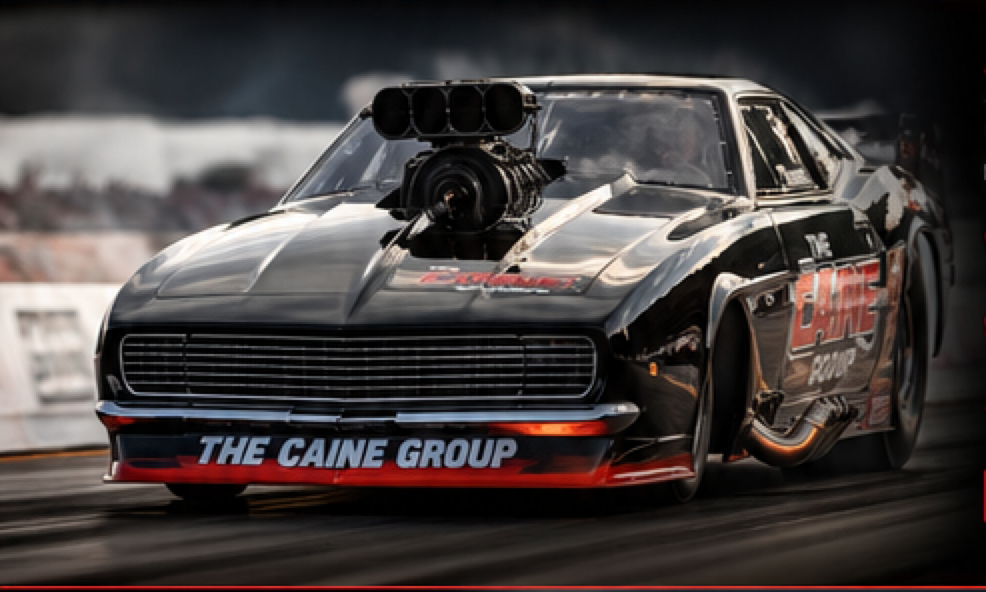
Power Up To 11,000 HP
Speed 330+ MPH
Elapsed 3.8 Sec Range
Distance 1,000 Feet
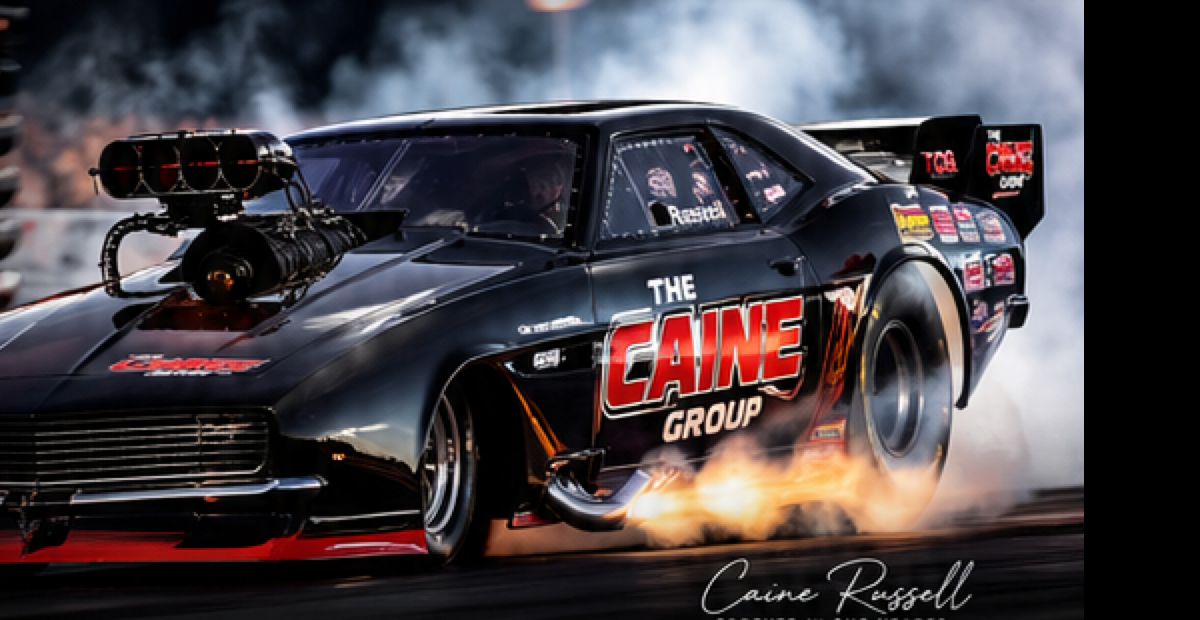
The NumbersFunny Car benchmark
Numbers That Barely Sound Real.
These are NHRA Funny Car class benchmarks, shown until the team-specific build sheet is confirmed. They give visitors the right scale for the machine.
NHRA lists Funny Cars as capable of speeds in excess of 330 mph, with current record runs pushing even farther.
A full run happens in the 3.8-second range, so every setup decision has to work almost instantly.
Funny Cars use supercharged, fuel-injected 500-cubic-inch engines related to the same architecture as Top Fuel.
All figures are NHRA Funny Car class benchmarks. Team-specific numbers will be confirmed from the final build sheet.
AnatomyWhat makes it work
A Funny Car Is A Controlled Explosion With A Driver In It.
System Stack
Every system exists for one reason: turn grip, horsepower, and driver safety into a clean four-second run.
- 01Powertrain
- 02Grip And Control
- 03Driver Safety
Supercharged 500-Inch V8
A nitro-burning, supercharged engine package built for seconds of maximum force, not long-duration comfort. This is the violent center of the whole car.
CombustionTimer-Controlled Hit
There is no conventional transmission. Power reaches the tires through a multistage clutch program the crew tunes for the surface, weather, and lane.
No GearboxNitromethane
Nitro brings the smell, the thunder, the flames, and the pressure wave fans feel before the car even stages.
Fuel LoadHuge Rear Slicks
The rear tires are part traction device, part shock absorber, and part visual signature when the car squats and leaves.
Contact PatchCarbon-Fiber Shell
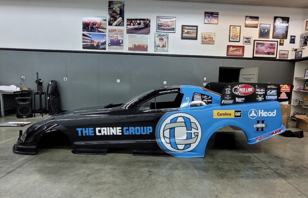
The flip-top body loosely resembles a production car, but it is built around aerodynamic load, service access, and survival.
Funny CarChromoly Tube Structure
Under the body is the real race car: a purpose-built chassis designed to keep the driver centered in a violent straight line.
StructureCockpit And Containment
Driver positioning, belts, shields, fire systems, and body tethers all exist because everything happens at impossible speed.
ProtectionTwin Parachutes
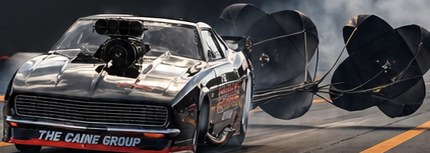
The run is not over at the stripe. Chutes, brakes, and driver control turn a 330-mph blast into a safe turnoff.
StopUnder The BodySystem map
Every Part Has A Job Before The Tree Drops.
The car may look like a body and a blower from the grandstands, but underneath it is a stack of decisions: clutch timing, fuel flow, chassis flex, tire bite, aero balance, driver visibility, and shutdown control.
Supercharger / Engine Driver Cell Rear Slicks Parachutes One PassLess than four seconds
The Run Happens Fast. The Page Should Slow It Down.
From warm-up to chutes, each step is a tiny window for the driver and crew to get the car home clean.
- 01 Warm-Up
The engine fires in the pit or staging lanes and instantly becomes the loudest thing in the county.
- 02 Burnout
The driver heats the slicks, clears the tires, and gives fans the smoke cloud they came to see.
- 03 Back-Up
Crew members guide the car into the tracks it just laid down, lining up the best launch path.
- 04 Stage
Both cars creep into the beams. This is the last quiet moment before the hit.
- 05 Launch
The clutch starts feeding power. The body squats, the front lifts, and the car is gone.
- 06 Half Track
The car is still pulling hard, still accelerating, and still trying to move around under the driver.
- 07 Finish
A run in the 3.8-second range can arrive at more than 330 mph in only 1,000 feet.
- 08 Chutes
Twin parachutes bloom, the brakes come in, and the driver brings the machine back from the edge.
Cool FactsStuff fans ask about
The More You Know, The Wilder It Gets.
A nitro Funny Car does not shift like a street car; the clutch controls how the power reaches the tires.
The carbon-fiber body can tilt up so the crew can service the chassis, engine, clutch, and cockpit.
Crew chiefs tune clutch, fuel, timing, and tire strategy for a race that lasts less than four seconds.
At speed, the rear slicks grow taller and change the effective gear ratio as the run unfolds.
Header flames are part of the nitro show, especially under the lights when the car is loaded hard.
Parachutes are not decoration. At these speeds, shutdown is part of the performance package.
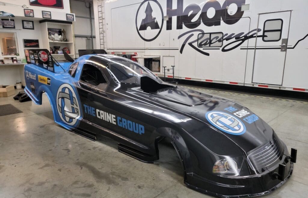
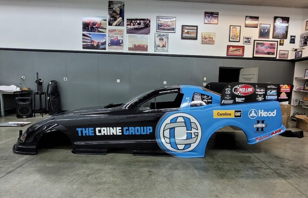
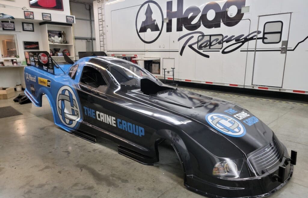
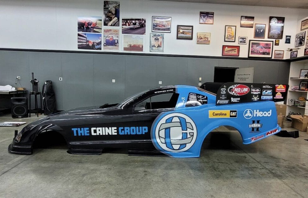
PhotosCar detail wall
As Many Angles As We Can Get.
Race-week media will fill this wall with engine bay, cockpit, slicks, body-off, burnout, staging, chutes, and pit shots.
NextHear it in person
See Where The Car Runs Next.
The schedule page keeps the machine tied to the season with race-week status, ticket links, event guides, and results.
May 29-31 · Mechanicsville, MD NHRA Potomac Nationals presented by JEGS